- Institution
- BRAC University
- Period
- 2017
- Supervisors
- Ms. Shamira Tabrejee and Ms. Zubaida Marufee Islam
Overview
This undergraduate thesis, completed at BRAC University in 2017, investigated whether Escherichia coli isolated from raw beef could act as a reservoir of antibiotic resistance.
Scientific background
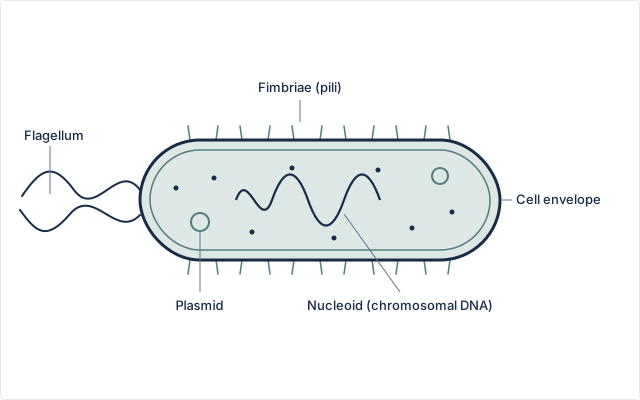
E. coli lives in the intestines of cattle and other warm-blooded animals, and meat can be contaminated during slaughter and processing. Resistant strains in food can carry resistance genes, often on plasmids that can pass to other bacteria, which makes food a possible route for antimicrobial resistance to spread.
The study was prompted by the growing worldwide consumption of beef. Seventeen E. coli isolates were obtained from raw beef samples collected in the Mirpur area of Dhaka, Bangladesh.
Research objectives
To investigate whether Escherichia coli isolated from raw beef samples could serve as a potential reservoir of antibiotic resistance.
Methodology
Isolates were tested for susceptibility to 20 antibiotics and analysed by plasmid profiling.
Findings
All 17 isolates were resistant to penicillin and oxacillin. Resistance was also seen to cephalexin (94 percent of isolates), erythromycin (71 percent), streptomycin (24 percent), tetracycline (18 percent), amoxicillin, kanamycin and ampicillin (12 percent each) and levofloxacin (5.9 percent). Two isolates, S6 and S8, were resistant to 15 of the 20 antibiotics tested. Each isolate carried between one and three plasmids, ranging in size from about 2.0 MDa to 65 MDa. S6 and S8 shared a 2.0 MDa plasmid that may contribute to their high level of resistance, and S6 carried a 65 MDa plasmid similar in size to pO157, which is characteristic of Shiga toxin-producing E. coli O157:H7. The thesis concludes that a correlation between plasmids and antibiotic resistance can be established.
Research significance
Monitoring resistance in bacteria from food contributes to a One Health understanding of how antimicrobial resistance moves between animals, food and people. The plasmid profiles reported here point to mobile genetic elements as a possible route for resistance in E. coli from meat.
Related conference presentation
A poster based on this work was presented at the SQUARE-ACI International Conference on Biotechnology in Health and Agriculture in Dhaka on 29-30 December 2017 by Shamira Tabrejee, A.B.M. Rezwanul Kabir and Dr. M. Mahboob Hossain.